
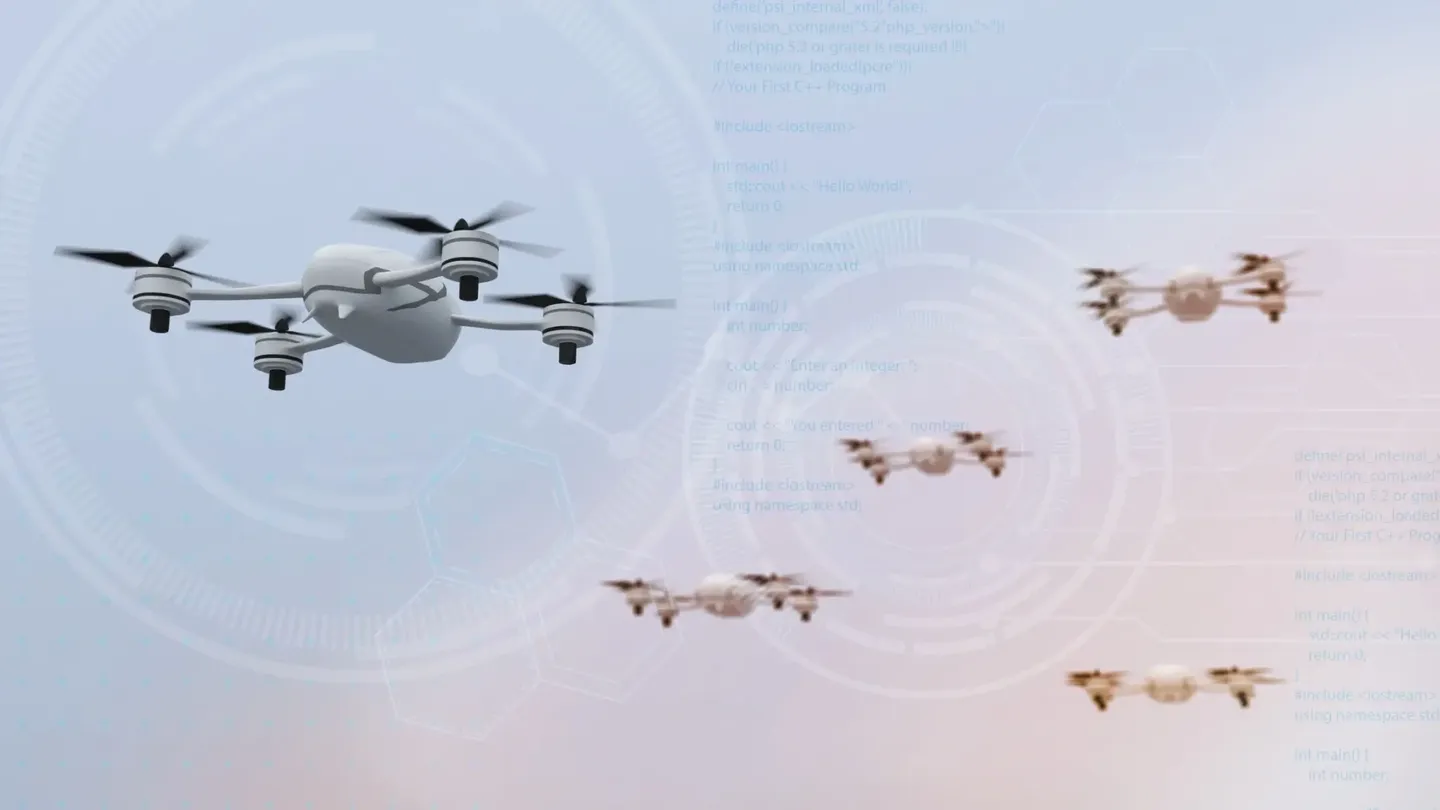
Turnkey Detection and Classification
Kytyra is purpose-built for multi-layered, fully integrated Counter-UAS architectures. Using advanced machine learning, we deliver next-generation recognition and classification with a single sensor, streamlining integration while increasing operational capabilities.
We don’t just “see” drones and other aerial threats; we capture multi-dimensional data to classify specific behaviors over time and space.
A New Standard for Operational Dominance
Low latency: Counter-UAS on the Edge
We capture unique light waveforms processed entirely on the edge in milliseconds, not data-heavy 3D plots or images.
Mobility: Counter-UAS on Move
Our low SWaP-C sensors are uniquely capable of identifying threat positions while mobile, protecting assets on the move.
Noise is No Problem
We use advanced machine learning to filter out noise in busy environments, radically
outperforming traditional solutions.
Drone Behavior Analysis
Kytyra uses a single sensor to capture drone location, speed, and movement in 3D space providing critical behavioral context.
Our Partners